
Writer's Block...at its Worst
Issue #61, Writer’s Block, 1 of 4


We’ll take a couple of issues for cautionary tales, and to figure out what Writer’s Block is. Then in the following two issues, we’ll try to defeat it.
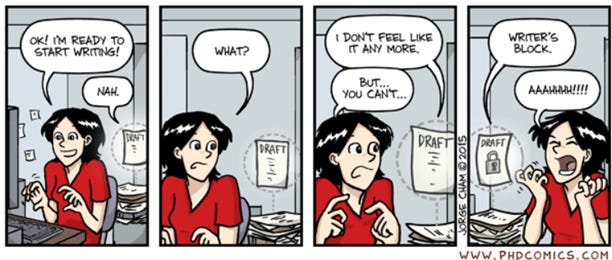
We all know this awful, two-word term (which we’ll alternately refer to it as WB in this mini-series). Let’s start by simply trying to put our finger on what WB is.
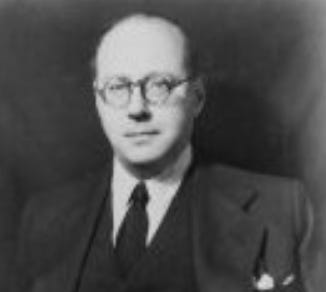
Psychoanalyst Edmund Bergler coined the term in 1947. He defined it—as a psychoanalyst would—as “…the unconscious wish to defeat one’s conscious aims, and to enjoy that self-constructed defeat.”
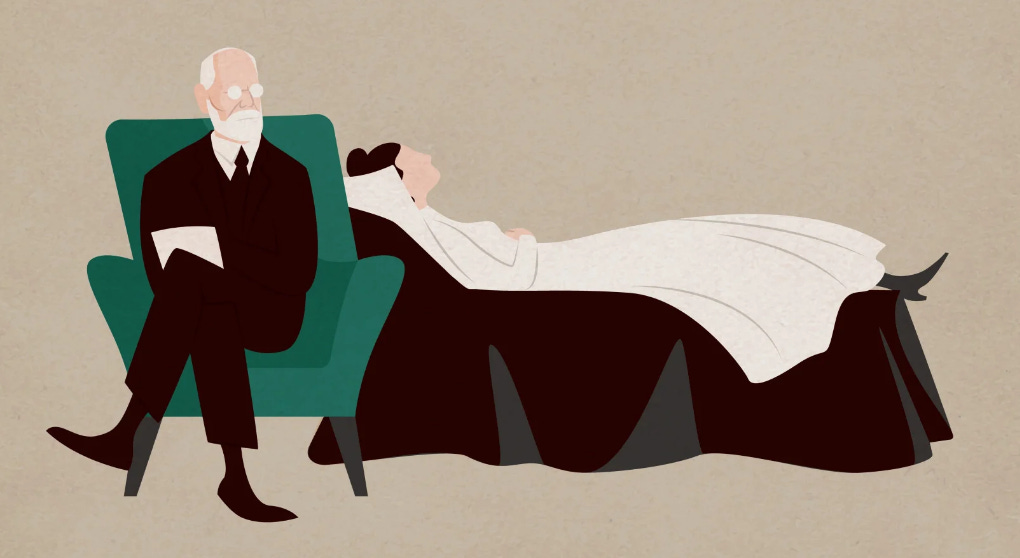
This is interesting, but a bit “in the weeds” for my taste, and hardly practical. It suggests more questions at the very time we’re seeking answers.

Wikipedia has a lengthy entry, starting with this definition:
Writer’s block: a non-medical condition…in which an author is either unable to produce new work or experiences a creative slowdown.
Or consider this more lighthearted definition:

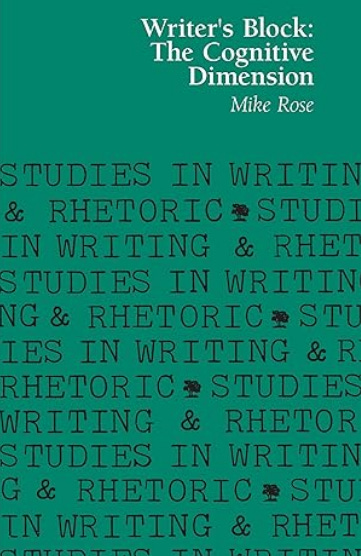
Rose in his book Writer’s Block: the Cognitive Dimension, defines WB with these validating words:
“…an inability to begin or continue writing for reasons other than a lack of skill or commitment…”

Bryan Hutchinson in “Clear the Clutter to Overcome Writer’s Block…” says that WB comes from laziness or lack of commitment or even a writing style which is shambolic (chaotic, disorganized or mismanaged).

Okay, I see you staring dazedly and dispiritedly through your screen at me. Let’s leave definitions by “the experts” behind, and preview next issue’s focus on WB and real, flesh-and-blood writers. But I warn you: the upcoming segue probably won’t make you feel a whole lot better.
We’ll soften the blow by framing it as a trivia quiz for the serious readers among you.
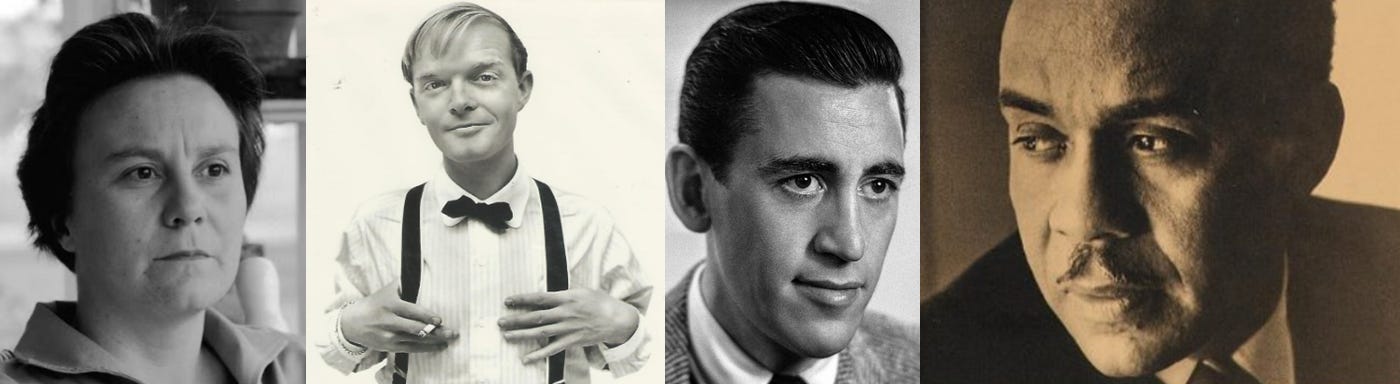
Consider the four literary luminaries above (names are listed in order). Without looking ahead, can you name and match a book to each author?

Were you able to do it? If so, and for bonus points, name something those four authors have in common in relation to their four books. Here’s a visual clue:
Hopefully you got the connection: each of those writers is notorious for writing one great book—and then being incapable of producing another. Ever. Here, in case you needed the answers, are the books.
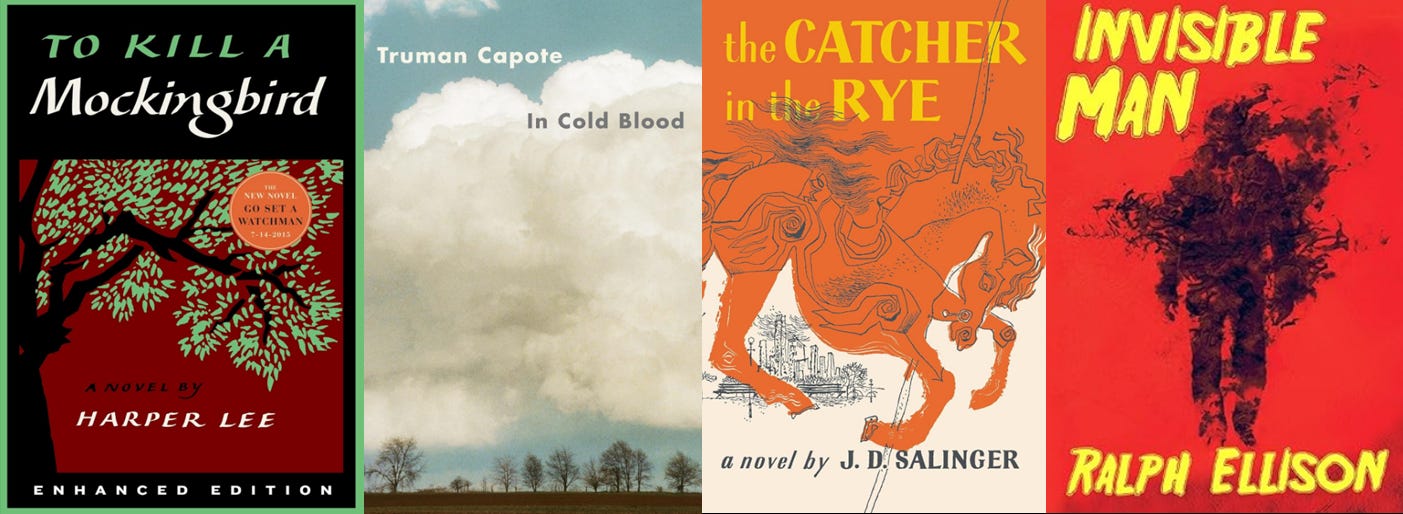
Let’s leave aside the reclusive J.D. Salinger, who kept writing after “Catcher in the Rye,” but made the odd choice to attempt no further publication...for the rest of his life.
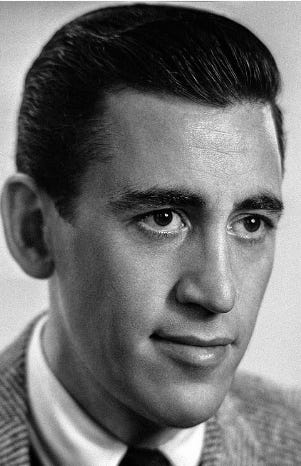
The others were well-known sufferers of writer’s block.
Lee attempted to produce a “To Kill A Mockingbird” follow-up for years, but in the end settled for writing letters to friends and fans. Capote added substance abuse to his own procrastination /writer’s block after the success of “In Cold Blood,” and spent the last decades of his life without finishing another book. Ralph Ellison after 1952’s “Invisible Man” spent decades writing thousands of pages of notes and prose for his next book. But he was stymied by perfectionism. By 1994, it was still not finished to his satisfaction. Shortly before his death that same year, he said of the 40-year+ novel-in-progress, “I’m eager to finish it and see how it turns out.”
And that, gentle writer/reader, is just how bad writer’s block can get.

If you want more, this Slate article goes into depth on Capote and Ellison, writer’s block, and procrastination. In the meantime, let’s take a cautionary lesson from these sad tales and try to keep our own literary acts together. Think about that for a second. Then see if you can recall the following word without clicking first:

What is shambolic?
Action Plan

Don’t miss this this wonderful complimentary collection of pictures. I’ve noted the photographers and artists whenever I use them on this very Substack. Please patronize—and don’t fail to credit—the creative photographers and graphics designers at Pixabay!
Next Up:

62) Authors Talk Writer’s Block, Writer’s Block 2 of 4
See you next time!
—Craig
Great article Craig. My gosh, if geniuses get blocked, what's that say for the rest of us : )